

Myth BUSTED: Blenderizing Tube Feeding Isn’t as Safe Compared to Conventional Formula
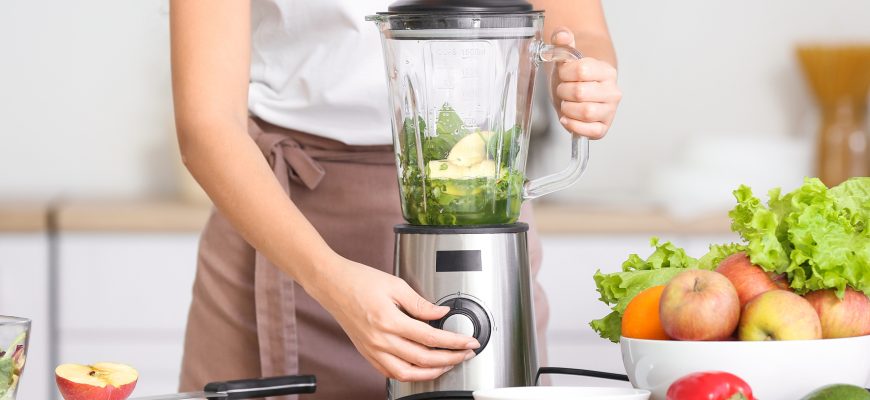
If you are a healthcare professional (HCP) trained in nutrition support, you were probably taught that only water, standard commercial formula (SCF) and medications may be safely administered through a feeding tube. You might even work at a facility that prohibits anything except those three items from going into a feeding tube. But what if giving tube-fed patients perhaps the most monotonous diet with synthetic ingredients for months or even years isn’t the only option to meet their needs or preferences? What if a diverse, whole food diet is an ideal feeding option for certain patients? Many tube-fed patients and caregivers think it is, and they are behind the demand for real food instead of formula1. Simply defined, blenderized tube feeding (BTF) is food and liquids blended to a consistency that will pass through a feeding tube2. This may be prepared from whole foods in a home kitchen, when making homemade blenderized tube feeding (hBTF). Another option is commercial blenderized tube feeding (cBTF) made by formula companies. The latter may be 100% blended food or formulas that contain food ingredients2.
Before commercial formula was available in the 1950s, feeding substrate for patients requiring a tube feeding was blenderized food. As a matter of fact, real food tube feeding was the documented feeding standard for most of human history. By the 1970’s, SCF had replaced BTF. SCF was sterile, had a known nutrient composition and was less likely to clog the tube3. These remain the primary reasons many HCPs prefer SCF today4. In 1956, the inventor of the first enteral feeding pump- Dr. Edward Barron- disapproved of SCF. He firmly advocated for BTF stating there were many beneficial components in whole food yet to be discovered. Since the 1950s scientists have identified thousands of beneficial phytochemicals. These serve the human body as antioxidants, provide healthful phytoestrogens, and exert anti-inflammatory effects. Furthermore, a diet that is varied, including plant-based foods, promotes a diverse intestinal microbiome that fosters growth of beneficial bacteria6.
Blenderized tube feeding may have positive benefits in regard to gut health. BTF may help promote greater diversity of microorganisms in the gastrointestinal (GI) tract. Low GI microbiome diversity can be associated with higher risk of bowel disease, heart disease, asthma, obesity and allergies6. Consumption of a diverse, plant-based diet can promote the growth of beneficial bacteria in the gut.
Chandrasekar et al demonstrated the stark differences between processed formula and whole food feeding when they compared health outcomes in 21 BTF and 20 SCF fed children. The SCF-fed children had higher levels of fecal calprotectin (FC) – a marker of intestinal inflammation. They experienced more gastrointestinal (GI) symptoms compared to the BTF-fed children. Conversely, BTF-fed children had much better GI symptom scores, lower FC scores and greater gut microbiome diversity7.
Hron et al observed similar differences in a group of 70 children followed for one year at a pediatric hospital. Similar to Chandraskar’s study, adverse GI symptoms were significantly lower in the 42 BTF-fed children compared to 28 SCF-fed children. Whole food tube feeding reduced diarrhea, retching, abdominal pain, and vomiting. However, Hron et al also linked BTF to less hospitalizations and specifically, fewer respiratory infections. What’s the connection? Microbiome diversity promotes a more robust immune response from the respiratory system8.
Patients and caregivers embraced BTF long before the scientific community published studies showing they were safe. In the last twenty-five years, the home enteral nutrition population has increased dramatically. This increase has given caregivers the opportunity to experiment with their tube feeding1,4. Parents of tube-fed children seeking solutions to conventional formula intolerance have initiated BTF. In addition to improved feeding tolerance and reduced infections, these parents saw that BTF improved oral intake in their children. The tube feeding community switching from formula to food is realizing the benefits of diet diversity perhaps more than any other segment in the population1,4. Industry has responded to their demands with more than 20 food and food-based enteral products. New generation pumps with larger bore tubing successfully administer these thicker formulas without clogging. Collapsible, reusable feeding bags that hold up to 500 mL of product makes bolus feeding much easier compared to syringe feeding. Educational materials on BTF for patients and HCPs is available to help with a smooth transition from SCF to a whole food feeding4.
In spite of all these developments, many HCPs express concerns about the potential for food borne illness with hBTF. But is that concern overstated? Most published work on microbial load of hBTF has been conducted in countries where safe food preparation and tube feeding administration are quite different compared to developed countries. However, two recent projects conducted in the US found that bacterial contamination of hBTF was minimal when accepted food safety standards were followed in a hospital or home kitchen9,10. Safe food preparation expectations include cooking food to the proper temperature, assuring that food prep utensils and surfaces are clean and sanitized, products used in the hBTF recipe are fresh and leftover product is stored at refrigeration temperature for no more than 24 hours. Also, BTF should not remain at room temperature for more than two hours. While risk of food borne illness is less likely with SCF feeding compared to hBTF, SCF may not provide beneficial pre- and probiotics that may be present in real food, such as yogurt, that may provide great benefit for tube-fed patients. If HCPs determine that caregivers are unable to safely make hBTF, cBTF products provide a viable, sterile option.
Industry developments with cBTF availability and new tube feeding pumps with tubing that handles thicker blended foods have mitigated concerns about food borne illness and clogged tubes. Perhaps it’s time to ask is SCF the only option for tube-fed individuals, or should real whole food tube feeding take the forefront?
Dr. Teresa Johnson is a consultant for Nutricia North America and has been compensated to write this blog post.
References:
1. Johnson, et al. J Alt Com Med. 2018;24:369-373.
2. Epp, et al. Nutr Clin Pract. 2023;38:1190-1219.
3. Chernoff. Nutr Clin Pract. 2006;21:126-133.
4. Brown T. Nutr Clin Pract, 2024;39:651-664.
5. Harkness A. J Am Diet Assoc 2012;102:399–404
6. Cresci AM. Nutr Clin Pract. 2025;1-20.
7. Chandrasekar, et al. Nutrients. 2022;14:3139.
8. Hron, et al. J. Pediatr. 2019;211:139-145.
9. Milton, et al. Nutr Clin Pract. 2020;35:479-486.
10. Johnson, et al. Nutr Clin Pract. 2019;34:257-263.
Myth BUSTED: Real Food Blends Doesn’t Have to Be All or Nothing
In clinical practice, we are trained to look for clear answers.
We rely on structured plans and defined protocols, and for good reasons: that kind of clarity helps reduce risk and guides decision-making in complex cases. But not everything in care works best when it’s black and white. Nutrition, especially, often falls somewhere in the gray.
People eat differently day to day. Their needs shift with age, illness, appetite, or circumstance. And what works for one person or family may not work for another. So, when we bring rigid thinking into tube feeding, whether it’s expecting either all formula or all homemade meals, or assuming that every meal must be perfectly calculated, we forget that tube-fed individuals are people too.
Their nutrition deserves the same flexibility and personalization we give everyone else. It’s time to expand how we think about enteral nutrition.
Making Room for Flexibility in Tube Feeding
The reality is that most people who eat by mouth do not eat the same thing every day, or prepare every meal from scratch.
People eat to fuel up for a big event, because something smells good, to connect with others, or just because it’s lunchtime. Meals are often a mix of home-cooked food, takeout, convenience options, frozen meals, and snacks. Many of these choices are spontaneous and do not require strict calorie or nutrient tracking, and nobody expects that.
People using feeding tubes are living life, too. Yet, tube-fed individuals and their families are often made to feel like they must be very rigid, tracking every nutrient and making every meal perfectly balanced to succeed. It is no surprise that this pressure leaves many feeling overwhelmed, boxed in, and stuck. The truth is, we have made this harder than it needs to be.
By not recognizing the real-life needs and limits of families, many end up with feeding plans that do not feel good and miss out on the health benefits of including real food in a manageable way – benefits that everyone else is encouraged to enjoy.
Clinical Benefits of Real Food for Tube Feeders
There is growing evidence that real food can make a noticeable difference for people receiving nutrition through a feeding tube. Across multiple studies, families report fewer symptoms like nausea, vomiting, abdominal pain, diarrhea, and reflux when switching from conventional formula to a blenderized diet1.
We are still learning exactly why this happens, but there are a few likely reasons:
- For one, real food is often thicker than standard formula, which may help reduce reflux and vomiting2.
- A blenderized diet tends to provide an improved nutrient profile comprised of diverse whole food ingredients, which exert a more physiologic gastric motility profile2.
Research also shows that growth can continue as expected on a blended diet. In fact, one study observed improved weight and height z-scores after children transitioned to real food3.
And those are just the physical outcomes.
People who use a blenderized diet, and the caregivers supporting them, report feeling more satisfied with feeding compared to those using conventional formula.
Many say it feels more personal and empowering. It allows families to share meals, prepare food together, and feel more connected4.
Real-life success stories reflect these experiences, showing how real food can bring meaningful changes beyond just nutrition.
Why Variety Matters in Blenderized Food and Formula
I’ve seen firsthand just how important variety is when it comes to how well someone tolerates their tube feeds. Most people on tube feeding end up getting the same formula for every meal, every day. I understand that this approach can be easier for clinicians to manage and for insurance to approve. It simplifies things and makes the feeding plan easier to follow, at least on paper.
The same thing happens with home blends. Families often receive just one recipe or a template to follow. Without much guidance or support, it’s easy to get stuck making the same blend day after day. And even when that recipe uses healthy whole foods and meets nutrient needs, digestive issues can still linger.
Think of it this way: If you had to drink the same nutrition shake for every meal, even if it met all your needs, how would you feel? You might feel sluggish. You might notice changes in digestion or energy. Our bodies are built for variety. Different foods support different gut bacteria, digestion, and overall wellbeing.
So, when we move away from all-or-nothing thinking, it becomes much easier for families to rotate foods, experiment, and find what works best, without burning out.
And that flexibility matters.
The Role of Commercial Blenderized Formulas in Simplifying Blended Diets
This is why I really appreciate having options that make it easier for families to include real food without adding extra stress.
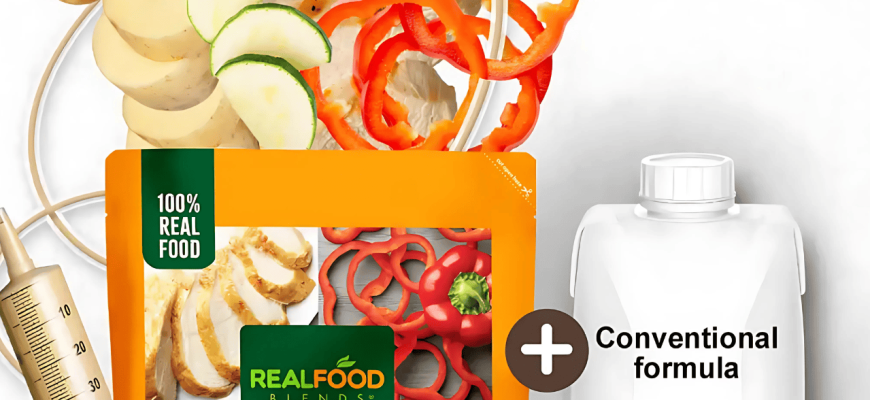
Commercial blenderized formulas provide a way to stay connected to real food and all its benefits, even when life gets busy or unpredictable. Real Food Blends® is a commercial blended option made from 100% real food and is the closest to homemade blenderized tube feeding, compared to other blenderized enteral formulas.
They make it simpler to get started, offer a reliable backup on hectic days, and help families stay consistent with their goals without needing to blend every single meal from scratch. It’s also important to mention that I’ve worked with hundreds of families whose children struggled to tolerate formula alone, even when it was made from real food. But when those products were combined with home blended meals, tolerance improved, feeding became more manageable, and families felt a lot more confident in their approach.
So, if you’re working with families who are struggling, you might be surprised at how much smoother things can go when they don’t have to pick between all formula or blending all their food.
Supporting Blended Diets in Clinical Practice
I understand that it can feel uncomfortable not knowing exactly what is in a homemade blended meal. You might worry about whether the calories are right, if the nutrients are balanced, or how to document it in the chart. Those are valid concerns.
But there are ways to start slow, safely, and with structure:
- Start with one meal.Help the family choose one feeding to blend and build a meal that matches the calories of their typical formula feed. Just replace one meal for a while and use this as a chance to learn with them!
- Use recipes with known calorie concentrations.Home blend recipes for tube feeding that range from 1.0-1.5 calorie per mL, like many formulas, make it easy to swap 1:1 and maintain consistency.
- Look at the big picture.Monitor growth, periodically assess intake and look for nutrient gaps, consider medical conditions and medications, and get lab work as needed – just like you would for someone eating by mouth. Add vitamin and mineral supplementation as needed.
We also need to recognize that the expectations we place on tube-fed individuals are often unrealistic. We rarely know exactly what oral eaters consume each day, and we do not expect that level of precision from them.
We don’t tell children or adults to drink only packaged nutrition shakes just because we can track those more easily. Tube-fed children deserve the same trust and flexibility, along with the support to make real food work for them.
A Balanced Approach to Real Food and Tube Feeding
Supporting real food doesn’t have to be complicated, and it doesn’t have to be all or nothing.
As clinicians, we can play a powerful role in helping families feel confident and supported as they figure out what works. And it’s okay if it looks different for everyone. For some families, that might look like one home blended meal a day. For others, it might mean making most of their food and only supplementing with a commercial real food product on occasion. And for most families, it means adapting to what works best for them in the moment, because every day and every week can look different.
The point is, there are options, and real food can fit into a tube feeding plan in more than one way. When we let go of the idea that there’s only one “right” approach, it gives families a real chance to try.
And when they do, it’s not just digestion that improves. Tube feeding becomes more manageable, more personal, and a lot less stressful.
Hilarie Geurink is a consultant for Nutricia North America and has been compensated to write this blog post.
References:
- Hron B, Fishman E, Lurie M, et al. Health Outcomes and Quality of Life Indices of Children Receiving Blenderized Feeds via Enteral Tube. J Pediatr. 2019 Aug;211:139-145.
- Walker S, Johnson T, Carter H, et al. Blenderized food tube feeding in very young pediatric patients with special healthcare needs. Nutr Clin Pract. 2023;1-8.
- Batsis ID, Davis L, Prichett L, et al. Efficacy and Tolerance of Blended Diets in Children Receiving Gastrostomy Feeds. Nutr Clin Pract. 2020 Apr;35(2):282-288.
- Bennett K, Hjelmgren B, Piazza J. Blenderized Tube Feeding: Health Outcomes and Review of Homemade and Commercially Prepared Products. Nutr Clin Pract. 2020 June;35(3):417-431.
Myth: Real Food Blends Isn’t Covered by Insurance – Unpacking the truth about enteral nutrition formula coverage and how to access whole food options.

Is Real Food Blends Covered by Insurance?
If you’re a healthcare professional supporting patients with a feeding tube, you’ve probably heard the question: “Is Real Food Blends covered by insurance?”
It’s a common myth — and one we’re here to bust.
The truth: Real Food Blends is covered by many insurance plans, including Medicare, select state Medicaid programs, and some private insurers. While coverage varies, access may be possible with the right documentation and support – and we’re here to help make the process easier.
How Coverage Works: The Basics
Real Food Blends meals fall under the blenderized tube feeding formula category and billed as HCPCS Code B4149 – Enteral Formula, Manufactured Blenderized Natural Foods with Intact Nutrients.
Here’s what you need to know:

- Coverage is available through Medicare, select state Medicaid plans, and some private insurance companies.
- Coverage varies by insurer and individual plan.
- A Letter of Medical Necessity and other
clinical documentation may be required.
To help patients get started, encourage them to:
- Contact their insurance provider to ask about coverage for Real Food Blends.
- Speak with their Durable Medical Equipment (DME) or home infusion company, who often manage the billing.
- Request a list of required documentation like physician notes or prior authorizations.
We offer a Letter of Medical Necessity template to make this easier. Just fill in your patient’s information and send it to the DME with the prescription.
Tip: Visit our Insurance Coverage webpage to search by state and find DME/home infusion companies that may supply Real Food Blends in your area.
What If Insurance Denies Coverage?
Despite their best efforts, some families may experience delays or denials. In some cases, denials can stem from documentation issues – like missing clinical notes or lack of prior authorization. We recommend working closely with your patients care team, supplier, and insurance company to understand the specific reason behind the denial.
However, a denial doesn’t always mean the journey is over. There may be opportunities to clarify or resubmit documentation, and in some cases, appeal the decision with supporting clinical information.
We offer tools to support this process, including:
- A customizable Letter of Medical Necessity
- An Enteral Referral Order Form to send to DME/home infusion suppliers
Access all reimbursement tools here.
Tips for a Smoother Insurance Process
Every insurance plan is different, but here are a few steps that may help improve the likelihood of a smoother coverage experience when recommending Real Food Blends:

- Start early: Begin conversations about coverage as soon as you’re considering Real Food Blends as part of your patient’s care plan.
- Provide clinical documentation: Include your patient’s medical history, tolerance
concerns, or history of what
hasn’t worked – including
context can help show the need for a different approach. - Use the right codes: Real Food Blends falls under HCPCS B4149, categorized as a blenderized tube feeding formula.
- Include a Letter of Medical Necessity: We’ve created one to make this step easier for your team.
- Submit an Enteral Referral Form: This form can be sent to DME or home infusion suppliers to help ensure they receive all necessary documentation.
Request Free Samples
Before going through the steps to secure insurance coverage, it can be helpful for patients to try Real Food Blends first. That’s why we offer free samples* for healthcare professionals – to support the decision-making process and help determine tolerance and fit.
What You Can Request:
- Trial Pack: One of each of our 6 original meals (6 total)
- Select™ Trial Pack: Our calorie-dense (1.6 Cal/mL), high-protein options (3 of each, 6 total)
- Mini Snack: Good source of fiber in a 4oz snack-size format (3 total)
Samples can be shipped to your office or directly to your patient’s home — whichever is easier for you.
About Whole Food Tube Feeding & Real Food Blends Products
Why Blenderized Tube Feeding Matters
A growing body of evidence indicates that Blenderized Tube Feeding may improve common symptoms of formula intolerance, such as:
- Nausea and vomiting1,2
- Gagging/retching3,4
- Reflux associated with tube feeding5,6
- Bowel irregularity1,7
Real Food Blends is The Closest to a Homemade Blenderized Tube Feeding**
Real Food Blends meals are a true blenderized diet and are: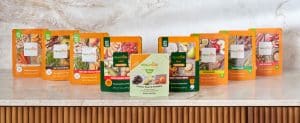
- Ready-to-feed and shelf-stable
- Made from 100% real foods, free from synthetic ingredients
- Designed for both kids and adults with a feeding tube
With 8 different meals and 1 snack, Real Food Blends offers a variety of protein sources, fruits, vegetables, whole grains, and fat sources. Each product contains 5-8 simple ingredients and provides a whole food tube feeding option.
Real Food Blends is available through:
- Insurance-covered DME/home infusion companies
- Realfoodblends.com (subscription available, 10% off)
- Amazon.com
Take the First Step
Request a sample today and discover how Real Food Blends can fit into your patient’s tube feeding plan.
- Request samples for your patients Limit 1 of each sample per patient
- Access tools to support reimbursement, like a Letter of Medical Necessity and Enteral Referral Form for DME/home infusion companies
- Visit our Insurance Coverage page for more information on how to find a DME/home infusion company carrying Real Food Blends.
- Spurlock, et al. Nutr Clin Pract. 2022;37:615-624. 2. Hron, et al. J Pediatr. 2019;211:139-145. 3. Kernizan, et al. JPGN. 2020;71:124-128. 4. Batsis, et al. Nutr Clin Pract. 2020;35:282-288.5. Pentiuk, et al. JPEN. 2011;35:375-379. 6. Gallagher, et al. JPEN. 2018;42:1046-1060. 7. Schmidt, et al. Clin Nutr. 2019;38:332-240.
*Samples can only be requested by licensed healthcare professionals. Limit 1 of each sample per patient.
**Compared to other blenderized enteral formulas.